
Last updated October 17, 2026
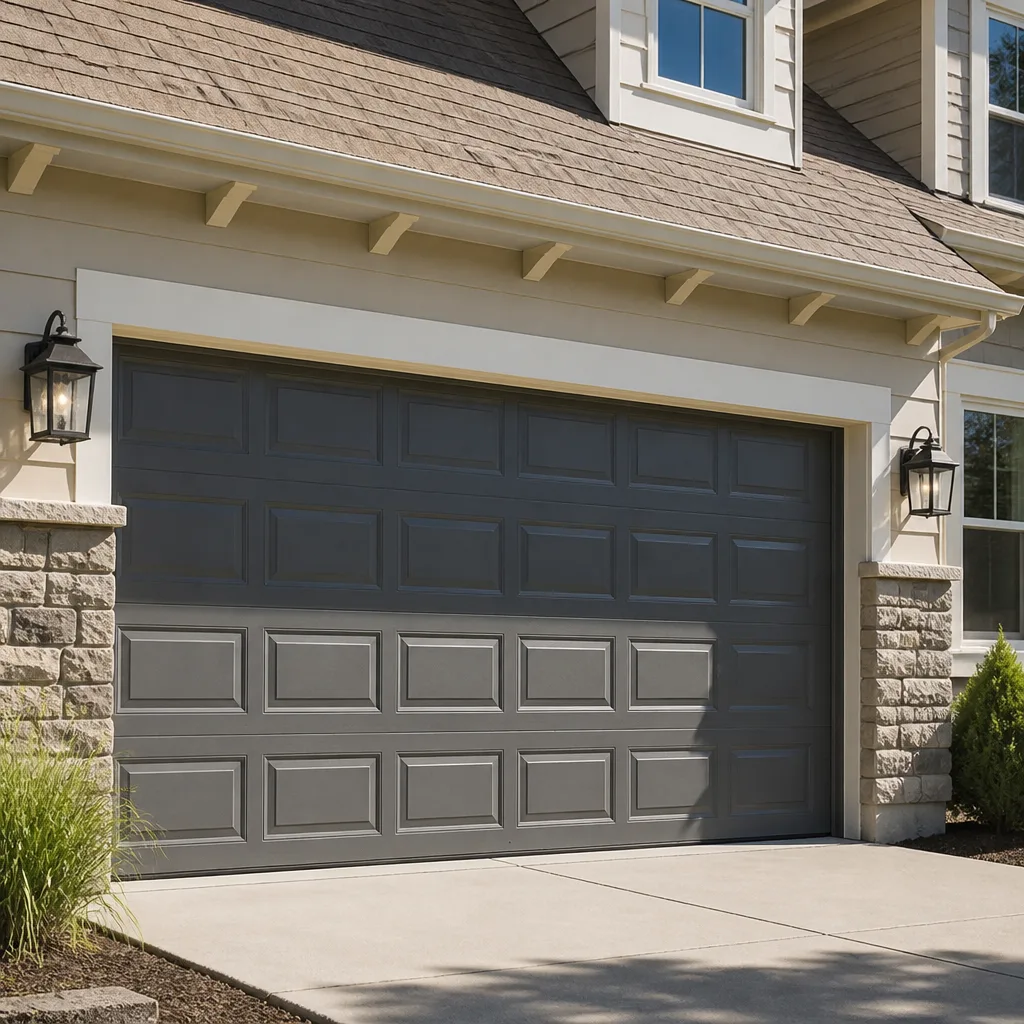 Raised-panel steel
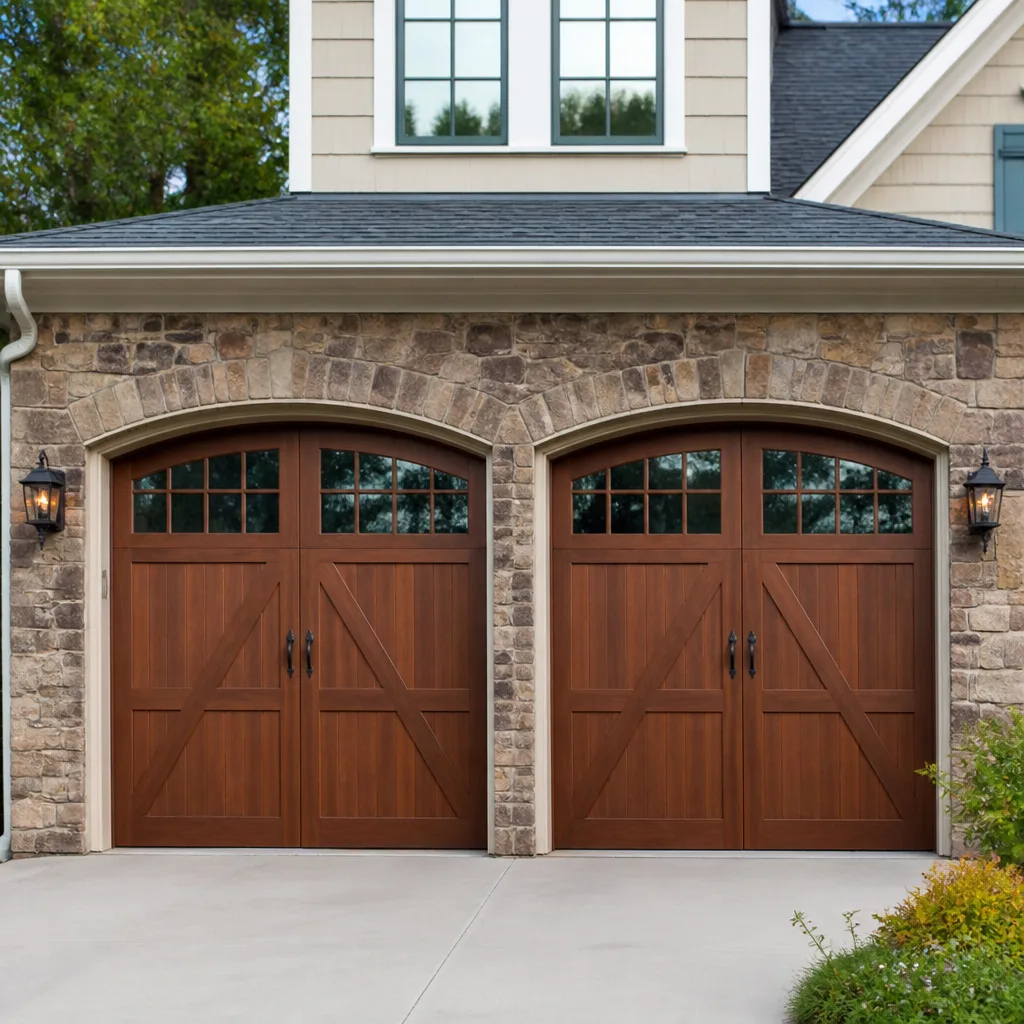 Carriage house
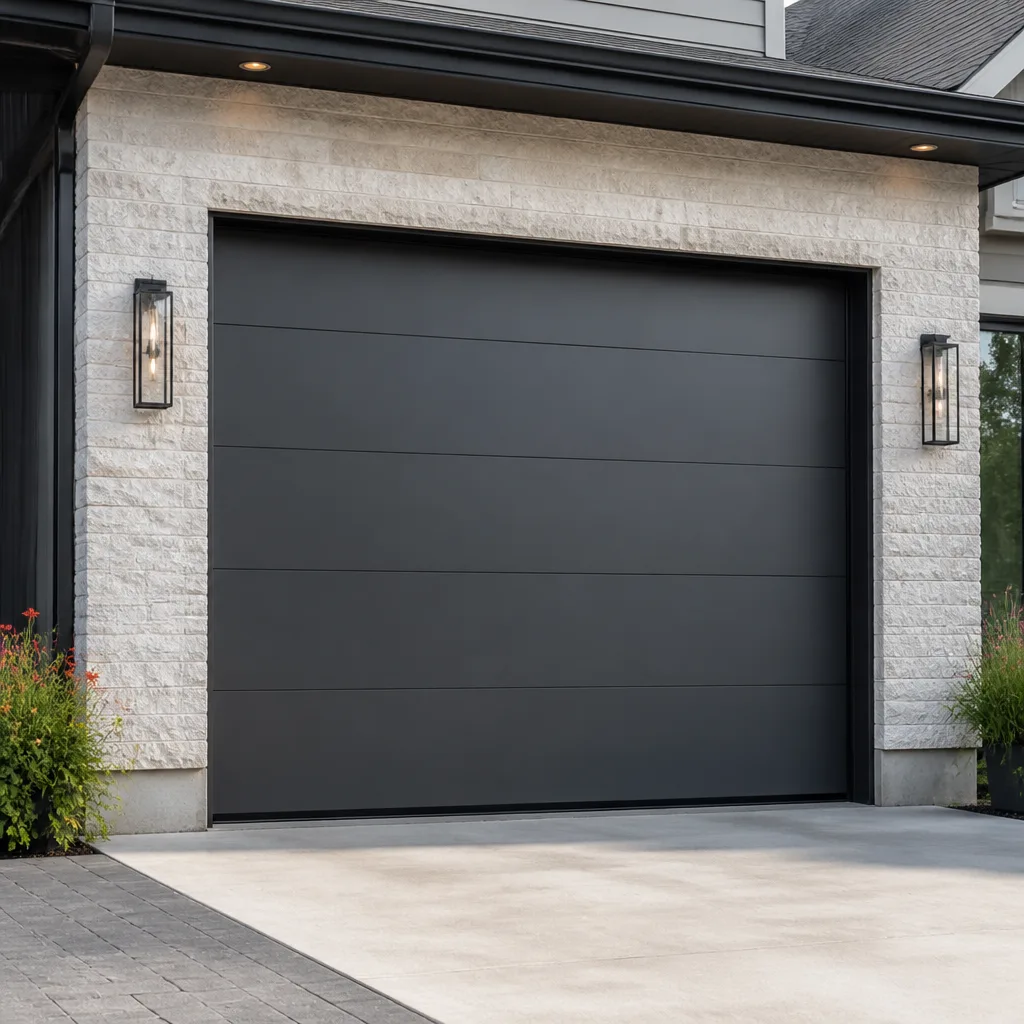 Modern flush
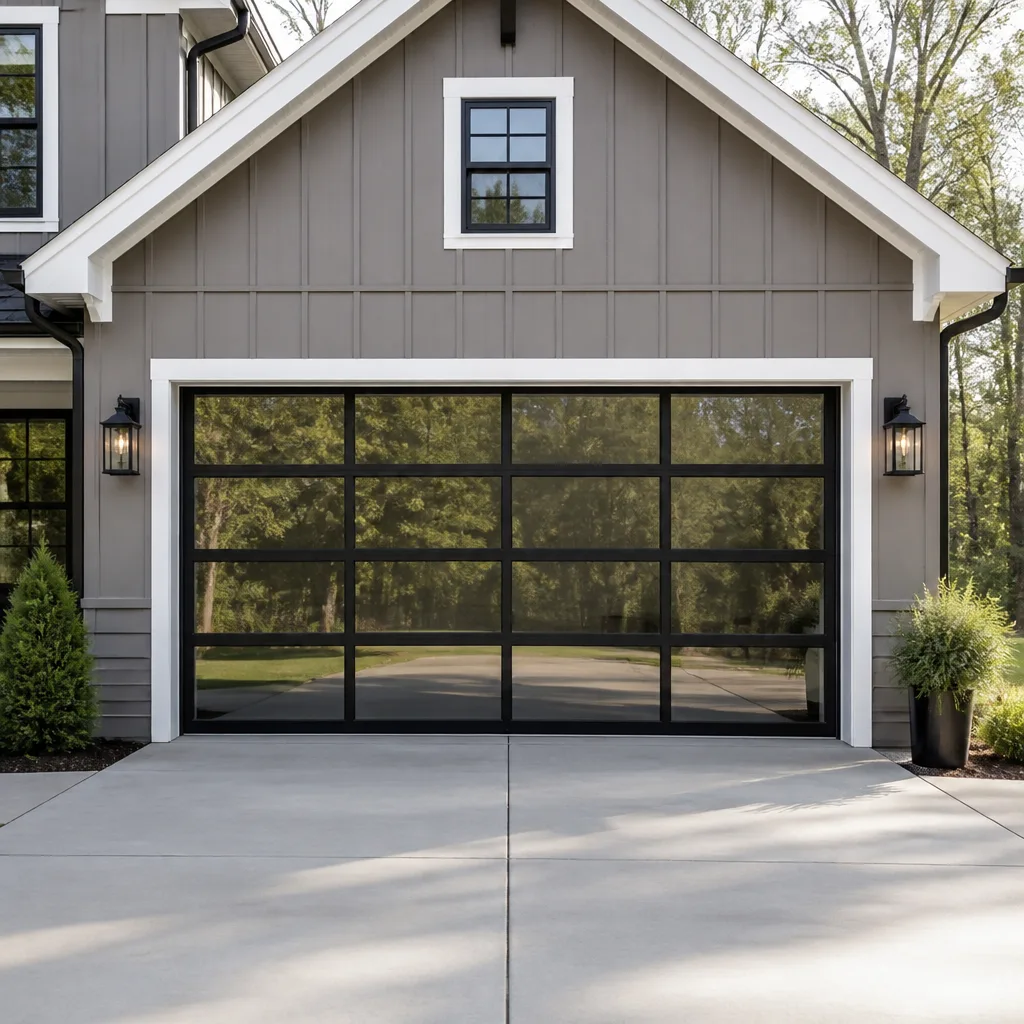 Full-view glass
 LiftMaster openers
 Chamberlain openers
Full 25-point door and opener safety check with every visit - springs, cables, rollers, tracks, and your LiftMaster or Chamberlain opener included
You get a price before we start. It does not change when the truck arrives.
Get your free estimateGarage Door Cost Breakdown: The San Antonio Homeowner’s Reference for 2026
Garage door companies in San Antonio are not required to itemize parts and labor separately unless you ask. The ones who resist that request are usually the ones with a 200 to 300 percent parts markup baked into a flat rate, which is why two neighbors on the same street can get quotes of $400 and $800 for the exact same spring repair. This guide and our more guides & resources exist because a homeowner who can read an itemized estimate never gets taken. You’ll see actual parts cost, realistic labor time, and the honest overhead a sustainable company in San Antonio needs to charge. By the end, you’ll be able to evaluate any garage door quote the way a service manager would, and you’ll know exactly where the fat gets hidden when a company doesn’t want you to see the breakdown.
Styles & brands we work with
Quick Answer
A garage door repair in San Antonio in 2026 costs between $125 and $650 for most common jobs, with spring replacement running $180 to $340, opener replacement $350 to $650, and a full door replacement $1,200 to $3,800 installed depending on the panel material and insulation. Parts typically make up only 30 to 40 percent of any repair invoice. The rest is labor, the service call, and a legitimate margin that every real company needs to stay in business, and a transparent one will show you all three lines without being asked.
Table of Contents
- The Real Anatomy of a Garage Door Quote
- Line-Item Pricing: The 12 Most Common San Antonio Repairs in 2026
- Why the “Free Service Call” Is Almost Always More Expensive
- Tune-Up vs. Documented Inspection: The $200 Difference
- How to Read a Full Door Replacement Quote
- The True Cost of Cheap Springs Over 10 Years in San Antonio
- Common Mistakes to Avoid
- When to Call a Professional
- Frequently Asked Questions
- The Bottom Line
The Real Anatomy of a Garage Door Quote
Every garage door repair invoice, whether the company shows it to you or not, has the same five components. Learn to see them and the price makes sense immediately.
Parts cost. This is what the part actually costs from a wholesale distributor like a supply house in the San Antonio industrial corridors off Rittiman Road or Perrin Beitel. A torsion spring that fits a standard 16-by-7 residential door costs a company $35 to $70 depending on wire gauge and cycle rating. A replacement circuit board for a Chamberlain or LiftMaster opener runs $60 to $110. A set of nylon rollers costs $4 to $8 per wheel.
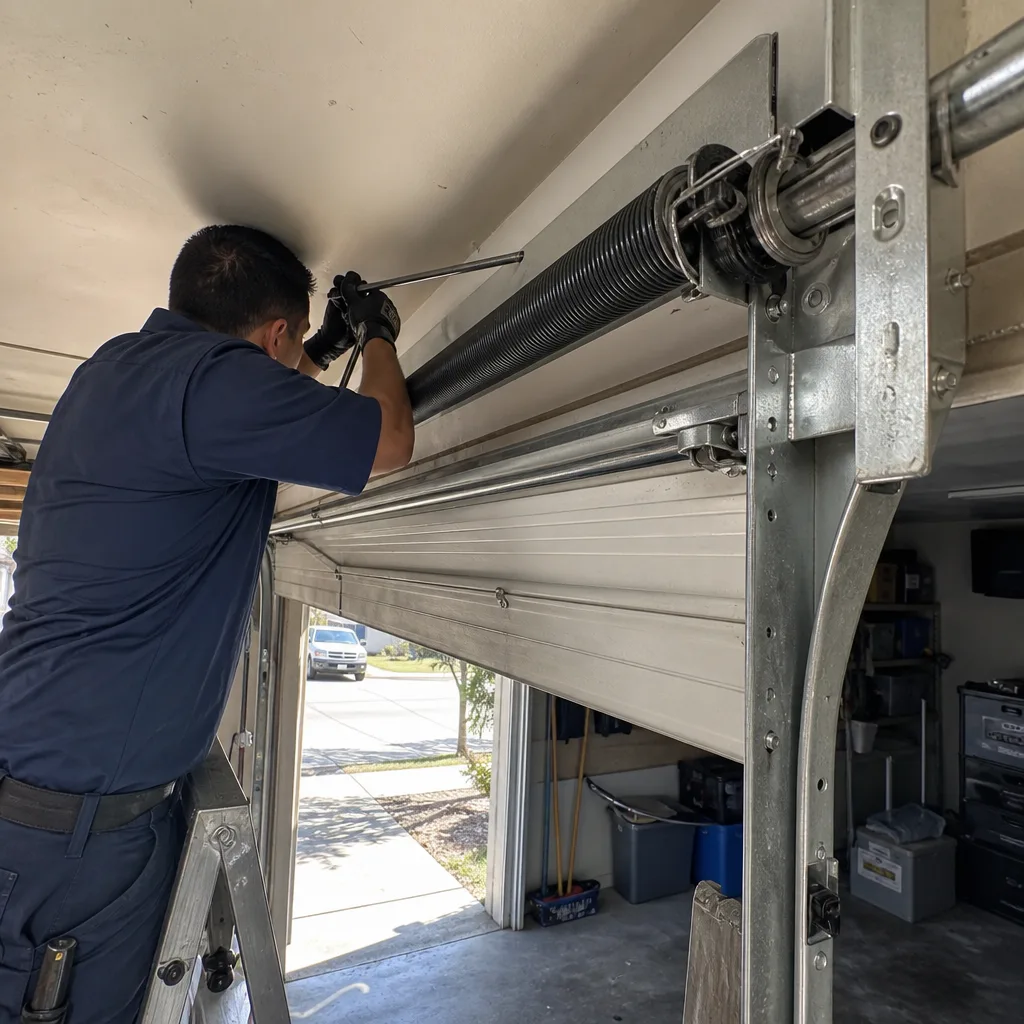
Labor. Most San Antonio garage door repairs take 45 to 90 minutes. A spring replacement is a one-hour job for an experienced technician. An opener swap is two hours including the rail assembly and safety sensor alignment. At a fair market rate of $80 to $120 per hour for a licensed, insured technician, labor should be $80 to $240 on most service calls.
Service call or diagnostic fee. This covers the truck roll, fuel, insurance, and the technician’s time to reach your house. In San Antonio’s market, a fair diagnostic fee is $49 to $69, and it is the honest way to pay for the visit itself. Companies that charge $0 for the service call are not doing you a favor. More on that below.
Overhead and margin. A sustainable garage door company in San Antonio pays commercial auto insurance that is brutal in this region, workers’ compensation, ongoing training, and the leasing cost for a shop within driving distance of neighborhoods like Stone Oak, Alamo Heights, and Helotes. A 20 to 35 percent gross margin on parts and labor is what keeps the phone answered at 2 a.m. instead of going to a voicemail tree. That margin is legitimate. What is not legitimate is hiding an 80 to 120 percent margin inside a flat rate and calling it “convenience pricing.”
Warranty reserve. Responsible companies set aside a small percentage on every job to cover callbacks and warranty work. It is built into the margin, not added as a line item, but it exists. A company that offers no meaningful warranty is either discounting this reserve out of their price or planning not to honor it.
Line-Item Pricing: The 12 Most Common San Antonio Repairs in 2026
These are the repairs we see most often across San Antonio, from the older 1970s ranch homes in Castle Hills to the newer builds in Cibolo and Schertz. The price ranges below reflect both parts cost and the labor a trained technician actually needs. The “honest total range” column is what a transparent company should charge, all in, including a diagnostic fee and a fair margin.
| Repair | Parts Cost | Labor + Fee | Honest Total Range |
|---|---|---|---|
| Torsion spring replacement (single) | $40 – $80 | $100 – $180 | $180 – $260 |
| Torsion spring replacement (both springs) | $80 – $160 | $120 – $200 | $280 – $360 |
| Extension spring replacement (both) | $50 – $100 | $100 – $160 | $150 – $250 |
| Cable replacement (one side) | $15 – $40 | $90 – $140 | $120 – $180 |
| Roller replacement (set of 10, nylon) | $40 – $80 | $70 – $110 | $110 – $190 |
| Hinge replacement (two to three hinges) | $15 – $35 | $70 – $100 | $85 – $135 |
| Garage door opener replacement (installed) | $220 – $420 | $130 – $230 | $350 – $650 |
| Opener circuit board replacement | $75 – $130 | $70 – $110 | $145 – $240 |
| Track adjustment and alignment | $10 – $25 | $80 – $120 | $90 – $145 |
| Photo eye sensor replacement (pair) | $35 – $65 | $60 – $90 | $95 – $155 |
| Weather seal replacement (bottom, 16 ft) | $25 – $50 | $50 – $80 | $75 – $130 |
| Panel dent repair or single panel replacement | $150 – $450 | $100 – $180 | $250 – $630 |
Three things to note about these numbers. First, the single spring versus both springs question is the most common upcharge tactic in the industry. On a two-spring door, a technician may offer to replace “the broken one” for $190 and then suggest “the other one looks weak.” The reality is that both springs wear at the same rate in San Antonio’s heat, and replacing one means you will be paying another service call fee within a year. Replacing both at once costs more today but saves $100 to $150 in avoidable fees.
Second, opener prices vary widely between a basic chain-drive Chamberlain unit and a belt-drive LiftMaster with a DC motor and battery backup. Belt-drive openers cost $50 to $100 more in parts but are dramatically quieter, which matters when the garage sits under a kid’s bedroom in a two-story home in Stone Oak.
Third, panel replacement pricing swings on two factors: the door’s age (older discontinued panel profiles cost more to source) and whether the door uses a standard steel stamping or a custom design. A single dent from a stray basketball in a 2018 Clopay door is usually a $250 to $350 fix. The same dent in a 2005 Wayne Dalton door with a discontinued panel profile can run $500 to $630 because the panel must be ordered and color-matched from a limited stock.
These are the prices a company with real overhead and real technicians should land within. If a quote comes in 40 percent below these ranges, someone is going to make it up somewhere else, usually with a “discovered” problem after the door is apart.
Why the “Free Service Call” Is Almost Always More Expensive
The math behind the free service call is simple and unkind. A company with a truck, a stocked inventory, a technician, and insurance has a hard cost of $60 to $90 just to arrive at your house in San Antonio. If they do not charge you for the visit, that cost has to be recovered inside the repair price. It always is.
Here is the difference in real numbers. A transparent company charges $59 to show up, diagnoses the problem, and then quotes the repair at parts plus labor plus a fair margin. If you decline the repair, you pay $59 and you are done. A “free service call” company shows up at no charge and needs to protect its truck roll, so every repair quote gets padded. The same spring that should cost $240 to $260 becomes $380, because the “free” visit cost $70 in real expenses and the company also wants a cushion for the three calls that day where the customer said no.
You are also paying a behavioral cost. When the service call is free, the technician is under pressure to produce a sale to justify the visit. That pressure changes the recommendation. A roller that needed lubrication becomes a “complete roller replacement to prevent track damage.” A circuit board with one failed relay becomes “your whole opener is shot, we recommend a new unit.” The incentive structure changes what you are told.
A $49 to $69 diagnostic fee is the honest payment for a real visit. It buys an actual diagnosis, a written quote, and the freedom to say no without a guilt trip or a sudden “minimum charge.” When you see a company advertising free service calls across San Antonio, ask yourself who is paying for that truck to show up. It is always the customer, one way or another.
Tune-Up vs. Documented Inspection: The $200 Difference
A tune-up is an unstructured, variable list of tasks sold at the door, usually for $99 to $149. A documented inspection is a defined checklist-see our Garage Door Repair Maintenance Checklist for San Antonio Homeowners-where the technician records measurements, torque values, and wear conditions for each component, and hands you the findings in writing. One of these prevents future repairs. The other mostly makes the truck payment.
Here is what a real 21-point inspection includes, and how it is different from a tune-up sold on a tablet:
- Spring cycle count and wire condition. The technician examines both torsion springs for rust, stretching, and the visible gap between coils that signals fatigue. The spring’s cycle rating gets compared against the door’s estimated usage. This is the number that predicts a future break.
- Cable wear at the drum and bottom bracket. Frayed strands get photographed and documented, not just “checked.”
- Roller and bearing condition. Each of the ten rollers gets rated. A documented report tells you that roller three on the left track has a flat spot and should be replaced within six months.
- Hinge and bracket torque. Loose carriage bolts on the garage door are the leading cause of door sag in San Antonio, where summer heat cycles expand and contract the metal hardware.
- Track alignment and spacing. Measurements are taken at the top, middle, and bottom of each track. A door that drifts left or right when opening is usually 1/8 to 1/4 inch out of parallel.
- Opener force settings. The technician uses a force gauge to confirm the opener’s upward and downward pressure is within manufacturer specification, preventing unnecessary strain on the motor.
- Safety reverse and photo eye verification. Both the mechanical reverse pressure and the infrared beam are tested and the results recorded.
- Weather seal integrity. Gaps along the bottom seal and side jambs get measured against San Antonio’s dust and summer rain patterns.
- Lubrication points. Only the correct points get lubricated, with a garage-door-specific lithium or silicone product that will not attract dirt.
- Balance test. The door is released from the opener and manually checked at the halfway point. A properly balanced door stays in place. A spring losing tension will drift or drop.
A documented inspection takes 45 to 60 minutes and should cost $79 to $129. The value is not the inspection itself. It is the written record. When a company hands you a report that says your springs are at 80 percent of their rated cycle life, you can plan the replacement in your budget instead of discovering it at 7 a.m. on a weekday when the door will not open and the kids are late for school.
A tune-up, by contrast, is usually 20 minutes with a rag, a spray can, and a suggestion that you “should really think about new springs.” There is no report, no measurements, and no accountability. The $200 difference shows up six months later when the undocumented spring breaks and you are paying an emergency service fee.
At Fernbrook Garage Doors San Antonio, every visit ends with a written findings report, and the price is quoted on paper before any work begins. That is not a premium feature. It is the minimum standard we would want if a technician were working above our own garage.
How to Read a Full Door Replacement Quote
A full door replacement is the largest single purchase in garage door care, and it is where quote confusion is most expensive. A proper quote separates three line items: the panel, the hardware, and the installation. When a company folds all three into a single lump sum, you lose the ability to compare across brands and configurations.
The panel. This is the door itself. In San Antonio’s 2026 market, a standard 16-by-7 steel door with no insulation runs $600 to $1,000 wholesale. A double-layer steel door with a 1-3/8 inch polystyrene insulation core runs $900 to $1,500. A premium three-layer door with polyurethane insulation, an R-value of 12 or higher, and a wood-look finish from Amarr or Clopay runs $1,600 to $2,800. The R-value matters in San Antonio, not because the garage needs to stay warm, but because an insulated door keeps the garage noticeably cooler in July and August, which extends the life of anything you store there and reduces heat transfer into the adjoining living space.
The hardware. This line should include the torsion springs matched to the door’s weight, the tracks, hinges, rollers, and the weather seal. On a replacement quote, hardware typically runs $200 to $400. A company that quotes $800 for “hardware” on a basic steel door is hiding margin here because this is the line item most homeowners never question.
The installation. Removing the old door, hauling it away, installing the new panel, assembling the track and spring assembly, and setting the opener back in place takes a two-person crew three to five hours. A fair installation line item is $400 to $700, including the haul-away. Disposal fees in San Antonio, where the city landfill off Highway 151 charges commercial tipping fees, add $40 to $80 to the true cost.
A completed quote for a standard mid-grade door should look roughly like this: panel $1,100, hardware $280, installation $550, total $1,930. If you get a quote for the same described door at $2,900, start asking for the itemization. If the company cannot or will not provide it, the gap is margin, not material.
We work on doors from Genie, Clopay, Amarr, and Wayne Dalton, and our technicians are trained on all the major opener brands as well. When we quote a replacement, the panel, hardware, and installation are separated on paper, and the written price is what you pay. We have found that San Antonio families are not afraid of paying a fair price. They are afraid of finding out the price after the door is already half-installed. That is a reasonable fear, and the fix is simple: ask for the itemization before you sign.
The True Cost of Cheap Springs Over 10 Years in San Antonio
San Antonio’s climate is hard on springs. The heat is the problem, but it works indirectly. High ambient temperatures accelerate the breakdown of the spring’s protective coating, and once that coating starts to flake, humidity from the Gulf air gets into the spring steel and begins a rust cycle. Rust creates friction between the coils, and friction creates heat as the spring winds and unwinds. A spring that loses its coating fails faster, plain and simple.
The average torsion spring on a standard two-car garage door in San Antonio lasts 10,000 to 15,000 cycles, which translates to roughly 7 to 9 years for a door that cycles twice a day. That is the mid-grade spring, rated for 15,000 cycles. The cheapest spring on the market, a 5,000 to 7,000 cycle spring, might last 3 to 4 years in the same conditions.
Here is the 10-year math, using 2026 San Antonio pricing:
- Cheap spring (5,000 to 7,000 cycles): Installation cost $180 to $220. Expected life 3 to 4 years. You will replace this spring twice, possibly three times, over 10 years. Total cost: $540 to $660, plus the inconvenience of two extra service visits.
- Mid-grade spring (15,000 to 20,000 cycles): Installation cost $260 to $340 for a pair. Expected life 7 to 10 years. You replace it once. Total cost: $260 to $340.
- High-cycle spring (30,000 cycles): Installation cost $360 to $450 for a pair. Expected life 12 to 15 years. You may never replace it while you own the home. Total 10-year cost: $360 to $450.
The cheap spring looks like a $180 savings in year one and costs you an extra $200 to $300 in total by year ten, not counting the disrupted mornings and the emergency service fee when a spring fails unexpectedly. We tell every San Antonio customer the same thing: if you plan to be in this house for more than five years, buy the mid-grade spring. It is the mathematical middle, and it is the spring we recommend on our own garage door spring repair in San Antonio work unless the door is a high-use commercial unit.
One more local note: a spring that fails in San Antonio usually fails in the morning. That is when the door gets its first cycle after sitting overnight, and the metal is at its coolest and most brittle. The phone calls start at 6:30 a.m. That is why a live person answering 24/7 is not a convenience feature. It is a functional part of the service.
Common Mistakes to Avoid
- Accepting a quote without an itemized breakdown. A single number with no parts, labor, or fee separation is an invitation to hide margin. Ask for the line items. A legitimate company will produce them in under a minute. A company that balks is telling you something about its pricing model.
- Replacing one spring on a two-spring door. Springs wear in pairs, and the unbroken spring is the same age as the broken one. Paying for a service call to replace the second spring six months later costs more than replacing both today.
- Choosing the cheapest roller set available. Steel rollers are $10 less per set than nylon rollers and they grind loudly on the track, accelerate track wear, and wake up everyone in a two-story San Antonio house. Nylon rollers with sealed bearings are the quiet standard and worth the difference.
- Skipping the safety sensor check during an opener replacement. The photo eye alignment is not optional and not decorative. It is the safety device that prevents the door from closing on a child or pet. A proper installation includes this verification, and skipping it is never an acceptable cost cut.
- Hiring based on the lowest quote without checking what is included. A quote $80 below market usually means something was left out: the haul-away fee, the new weather seal, the spring replacement that the door will clearly need next year. Compare line items, not totals.
- Delaying a spring replacement that shows visible wear. A spring with a visible gap in the coils does not fail on schedule. It fails when the door is holding the full weight and the tension line is at maximum. If a documented inspection flags your springs, schedule the work on your timeline instead of the spring’s.
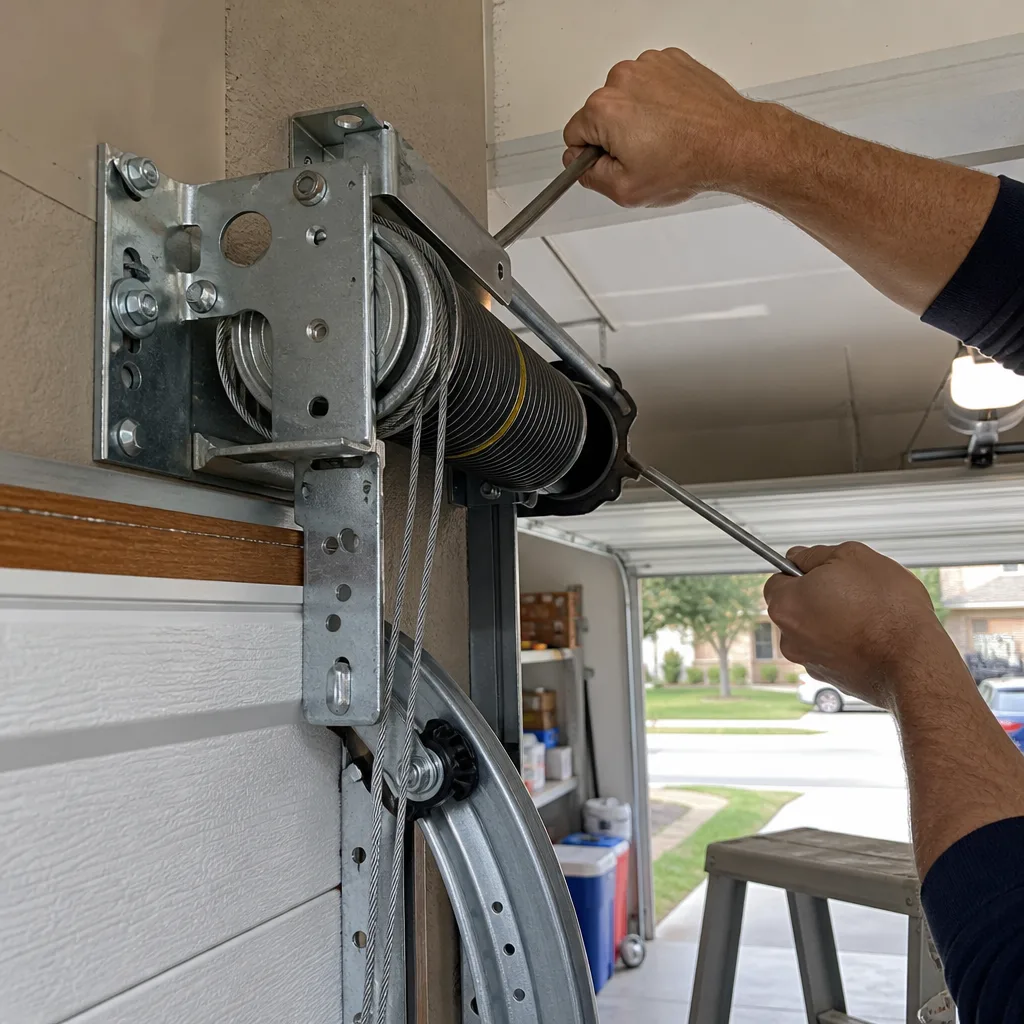
- Treating the garage door opener as a do-it-yourself project. The torsion springs on a garage door carry tension that can cause serious injury if mishandled. Even a straightforward opener swap involves the tension system, and this is not a task for a weekend with a YouTube tutorial. A trained, background-checked technician is the right call.
When to Call a Professional
Some garage door work is safe to evaluate yourself, and some is not. You can check your weather seal, watch the door for hesitation, and listen for grinding in the rollers-warning signs we detail in our Garage Door Warning Signs: A San Antonio Homeowner’s Reference Guide. You should not touch the torsion springs, the cables, or the bottom brackets, because these components are under high tension and can cause serious injury if they release unexpectedly.
Call a professional when the door will not open or close, when a spring is visibly broken, when a
cable is frayed or off the drum, when the door reverses mid-cycle, or when the opener runs but the door does not move. A diagnosis should cost $49 to $69 and should produce a written quote before any repair work starts.
If you are in San Antonio and need a straight answer on a garage door problem or a written price on a repair, call Fernbrook Garage Doors San Antonio at (806) 602-8374. Estimates are free, the price is written before work begins, and a live person answers the phone around the clock.
Frequently Asked Questions
Most garage door repairs in San Antonio in 2026 cost between $125 and $650, with common jobs like spring replacement landing at $180 to $340 and opener replacement at $350 to $650 installed. The exact price depends on the part, the brand, and the labor involved, and a transparent company will separate all three on the quote. Call (806) 602-8374 for a written estimate on your specific repair.
Yes, in most cases. Spring replacements, cable repairs, and roller swaps are same-day jobs for a technician with the right parts on the truck, and we carry the most common springs, cables, and rollers for San Antonio doors as standard inventory. A live person answers the phone 24/7, so call (806) 602-8374 and describe the problem and we will tell you honestly whether it is a same-day repair.
The price you are quoted before work begins should be the price you pay. At Fernbrook Garage Doors San Antonio, the price is written on paper and agreed to before any work starts, and that number does not change. If a genuine problem is discovered that requires additional work, we stop, explain what we found, and get your approval on a new written price before touching anything else.
Yes. Our trucks carry torsion springs in the standard San Antonio sizes, extension springs, cables, rollers, hinges, weather seals, and the common circuit boards for LiftMaster, Chamberlain, Genie, and Craftsman openers. That inventory is why we can complete most repairs in one visit instead of a diagnosis visit and a return trip.
Both springs on a two-spring door were installed at the same time and have cycled the same number of times, which means the unbroken spring is at the same end-of-life stage as the broken one. Replacing both now saves you a second service call fee and a second disruption within a year. It is the practical recommendation, not an upsell.
Ask for the itemized quote: parts cost, labor, service fee, and any additional fees. A company that can show you those lines without hesitation is pricing transparently. A company that folds everything into a single number is hiding its margin. The numbers in this guide give you the San Antonio baseline for comparison. If a quote falls far outside the honest ranges, ask why, and call (806) 602-8374 for a second opinion.
The Bottom Line
The difference between a $400 repair and an $800 repair for the same garage door problem in San Antonio is rarely the quality of the parts. It is the markup structure. A homeowner who asks for the itemized quote, understands the difference between a tune-up and a documented inspection, and knows the life-cycle cost of a cheap spring is a homeowner who cannot be overcharged. The numbers in this guide are real San Antonio market ranges for 2026, not national averages. Use them. Ask for the breakdown. A company worth hiring will hand you the paper without being asked twice.
If you have a garage door problem in San Antonio and want a written price before any work starts, call Fernbrook Garage Doors San Antonio at (806) 602-8374. We will answer in person, arrive on time, and protect your floors with shoe covers and drop cloths before the first tool comes out. We back every job with our 365-Day Done Right Promise, and our garage door repair in San Antonio service includes a clean-up photo before we leave, so you can see the standard you paid for. For full door replacements, see our garage door installation in San Antonio page for a written, itemized quote. The goal is simple: a door that works, a home that is left clean, and a price you saw in writing before anything got taken apart.
Written by Jesse Calder, Owner at Fernbrook Garage Doors San Antonio, serving San Antonio since 2002.
See the difference
 Before
 After
After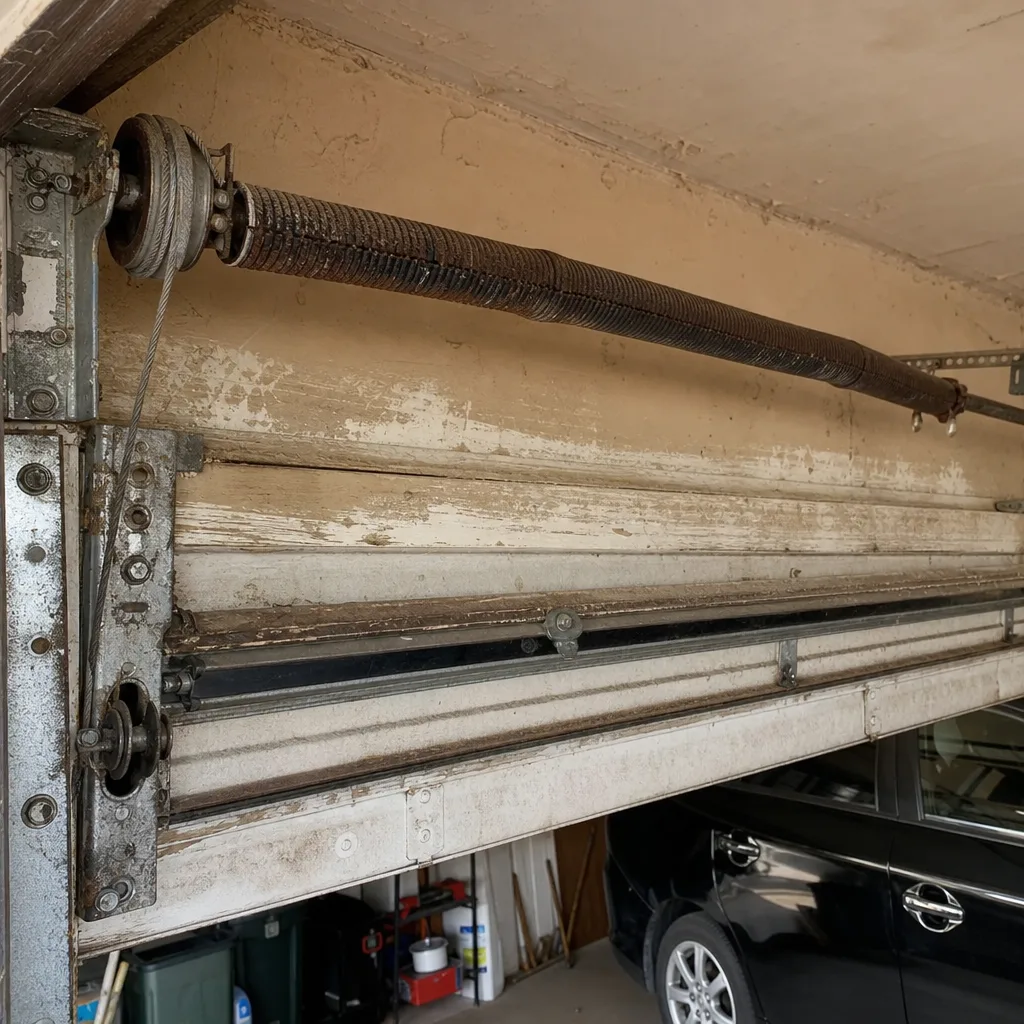 Before
 After
After Before
 After
After